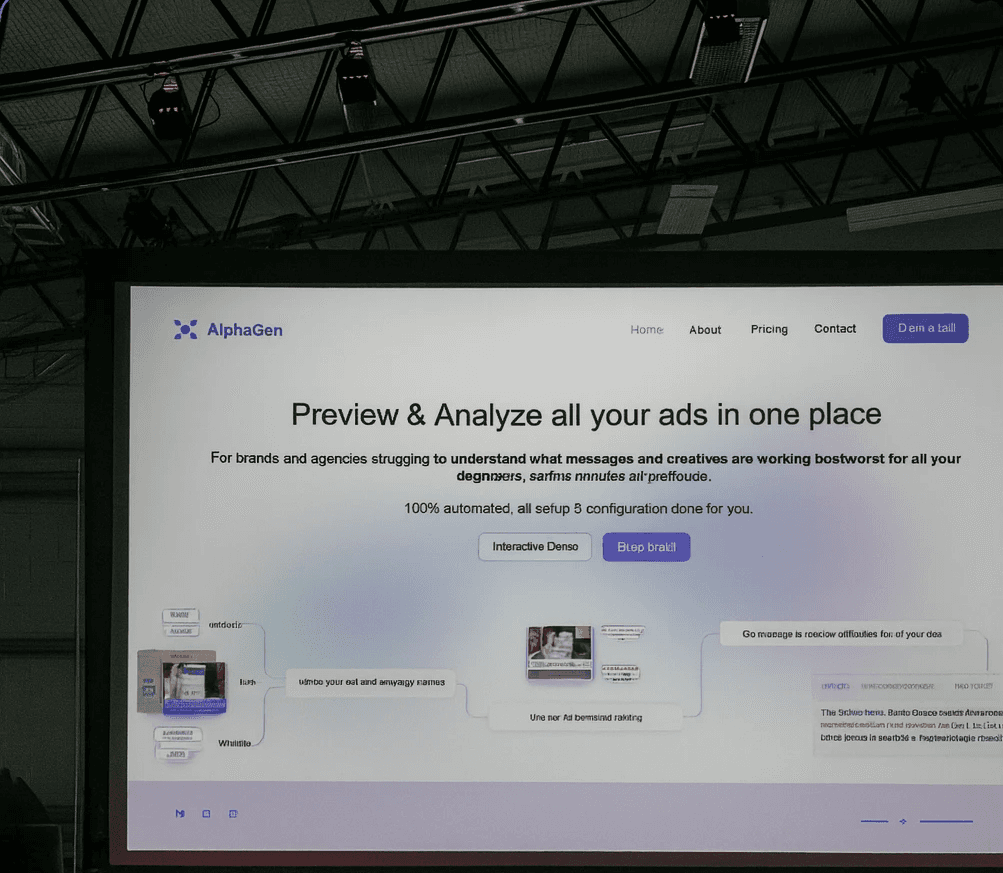
For brands and agencies struggling to understand what messages and creatives are working best/worst for all your segments, across multiple ad platforms.
"
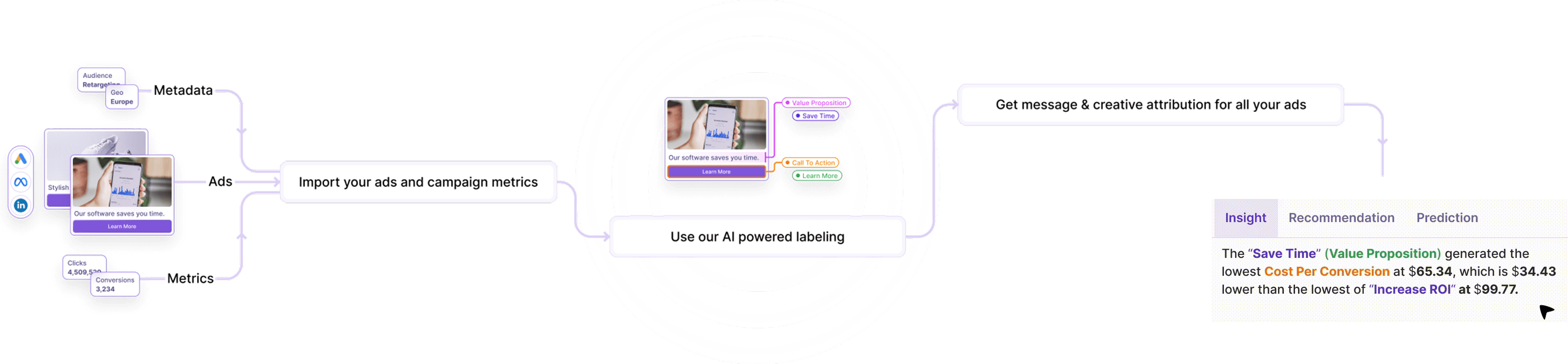
Modern performance marketing teams run campaigns across multiple platforms—Google, Meta, and LinkedIn—but lack a unified system to analyze ads, creatives, and competitor strategies. The data remains fragmented, making it difficult to understand which assets are performing well, what drives CAC/CPC changes, and how competitors are leveraging high-performing creatives.

Approach to Building the AlphaGen's Engineering Team
Shatterpoint set out to build an AI-native operating system that unifies fragmented data, automates analysis, and enhances advisory capacity:
01
Understanding AlphaGen’s Vision & Technical Demands
Before assembling the team, we ran a deep-dive with the founders to understand:
The product direction (AI-powered analytics, multi-model pipelines, scalable dashboards)
The velocity required to hit investor milestones
The long-term architecture roadmap
This gave us a clear blueprint of the exact engineering muscles the team needed.
02
Talent Identification With Precision
Instead of sourcing “generic” developers, we hand-picked engineers who matched AlphaGen’s needs:
Strong full-stack and data-oriented backend engineers
AI engineers comfortable with evaluation, fine-tuning, and MLOps
UI engineers skilled in crisp, analytics-heavy dashboards
We used our specialized assessment funnels—architecture breakdowns, AI problem-solving challenges, and system design interviews—to filter for engineers who could handle real complexity.
03
Pre-Deployment Upskilling
A core differentiator of WhatBytes is that every engineer undergoes custom upskilling based on the client’s product before deployment.
For AlphaGen, this meant:
Training the team on LLM orchestration and evaluation techniques
Upskilling backend engineers on scalable data pipelines
Bringing UI engineers up to speed on visualization libraries & design systems
Preparing all team members in collaboration patterns, sprint workflow, and code-quality guidelines
By the time the engineers were deployed, they already aligned with AlphaGen’s stack, standards, and problem patterns—removing the typical three-month “getting familiar” phase most teams struggle with.
04
Assembling a High-Compatibility Team
We purposely selected engineers who complement each other:
Seniors capable of guiding architecture
Mid-level engineers optimizing velocity
Fast-learning juniors who could handle execution with mentorship
This composition ensured both speed and sustainability.
05
Seamless Onboarding & Integration
We used our “48-hour integration sprint” framework:
Repository access + environment setup
Product walkthrough sessions
Codebase orientation
First sprint tasks broken down to create early momentum
Engineers were shipping consistent output from week one, not week eight.