"
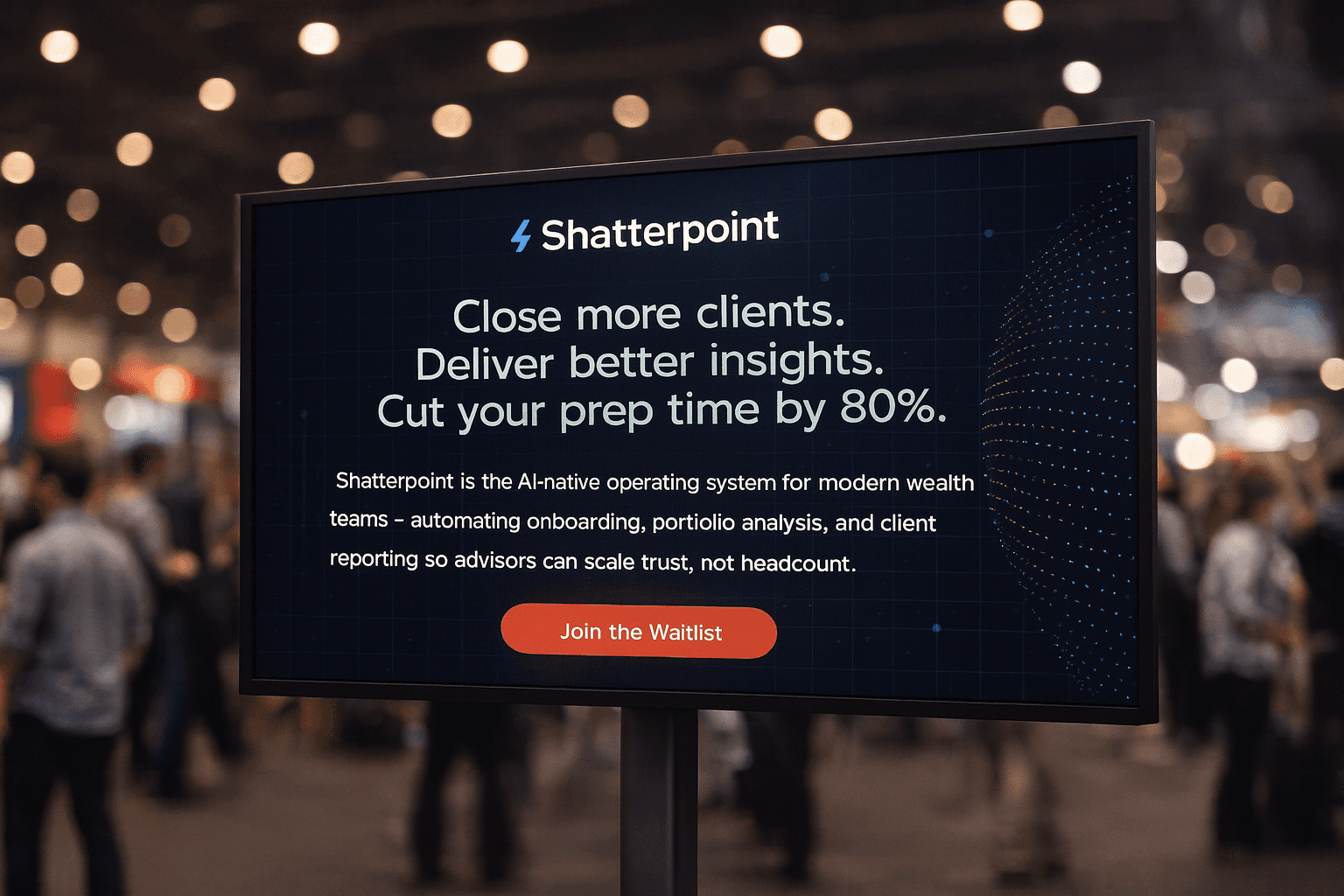
Wealth advisors, family offices & RIAs operate in a fragmented ecosystem:
Client data scattered across PDFs, Excel sheets, custodian exports & emails
Portfolio, tax, estate & planning tools operate in isolation
Hours lost reading documents & preparing reports manually
Small teams can’t scale due to heavy back-office workload

Approach to Building the Shatterpoint Engineering Team
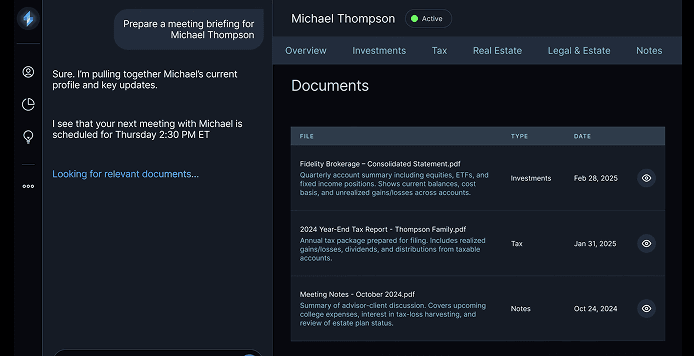
Shatterpoint set out to build an AI-native operating system that unifies fragmented data, automates analysis, and enhances advisory capacity:
01
Understanding Shatterpoint’s Vision & Technical Demands
We conducted deep-dive sessions with the founding team to map:
The architecture for a unified data engine capable of ingesting unstructured financial documents.
Multi-layered AI systems for document understanding, portfolio analysis, and contextual advisory insights.
The long-term roadmap: living profiles, automation of workflows, and enterprise-grade security.
Milestones necessary to support early customers while building a scalable foundation.
This clarified the exact technical capabilities and engineering depth required.
02
Talent Identification With Precision
We curated the engineering team deliberately instead of relying on generalist developers. The problem space demanded:
Backend engineers experienced with data infrastructure, document parsing, and scalable pipelines.
AI/ML engineers comfortable with OCR, LLM orchestration, fine-tuning, and retrieval systems.
Full-stack engineers skilled in building advisor-facing dashboards with performance-heavy data visualizations.
Engineers capable of handling financial domain complexity and compliance constraints.
We used our multi-stage assessment funnel — architecture reviews, systems design tests, and AI-focused problem solving — to ensure the team could operate at the required level.
03
Pre-Deployment Upskilling
Our core differentiator is preparing engineers specifically for the product they will build.
For Shatterpoint, this involved:
Training the team on ingestion of unstructured financial data and normalization patterns.
Hands-on sessions covering LLM agents, document intelligence, and contextual retrieval systems.
Workshops on wealth management domain knowledge: risk, goals-based planning, custodial formats.
Alignment on Shatterpoint’s architectural philosophy, coding conventions, and sprint cadence.
By deployment, engineers were already fluent in Shatterpoint’s domain and technology, eliminating the common multi-month learning curve.
04
Assembling a High-Compatibility Team
We structured the team intentionally:
Senior engineers to lead data architecture and AI pipelines.
Mid-level engineers to maximize delivery velocity on ingestion workflows and dashboards.
High-potential juniors trained specifically to execute rapidly on structured tasks.
This balance ensured both high throughput and long-term sustainability.
05
Seamless Onboarding & Integration
We used our “48-hour integration sprint” framework:
Repo access, environment setup, dev tools configuration.
Walkthroughs of architecture, workflows, and backlog priority.
Breakdown of the first sprint to generate early momentum.
Clear alignment with the founding team’s expectations and collaboration style.
The team was delivering production-ready contributions within the first week, not the typical first quarter.